

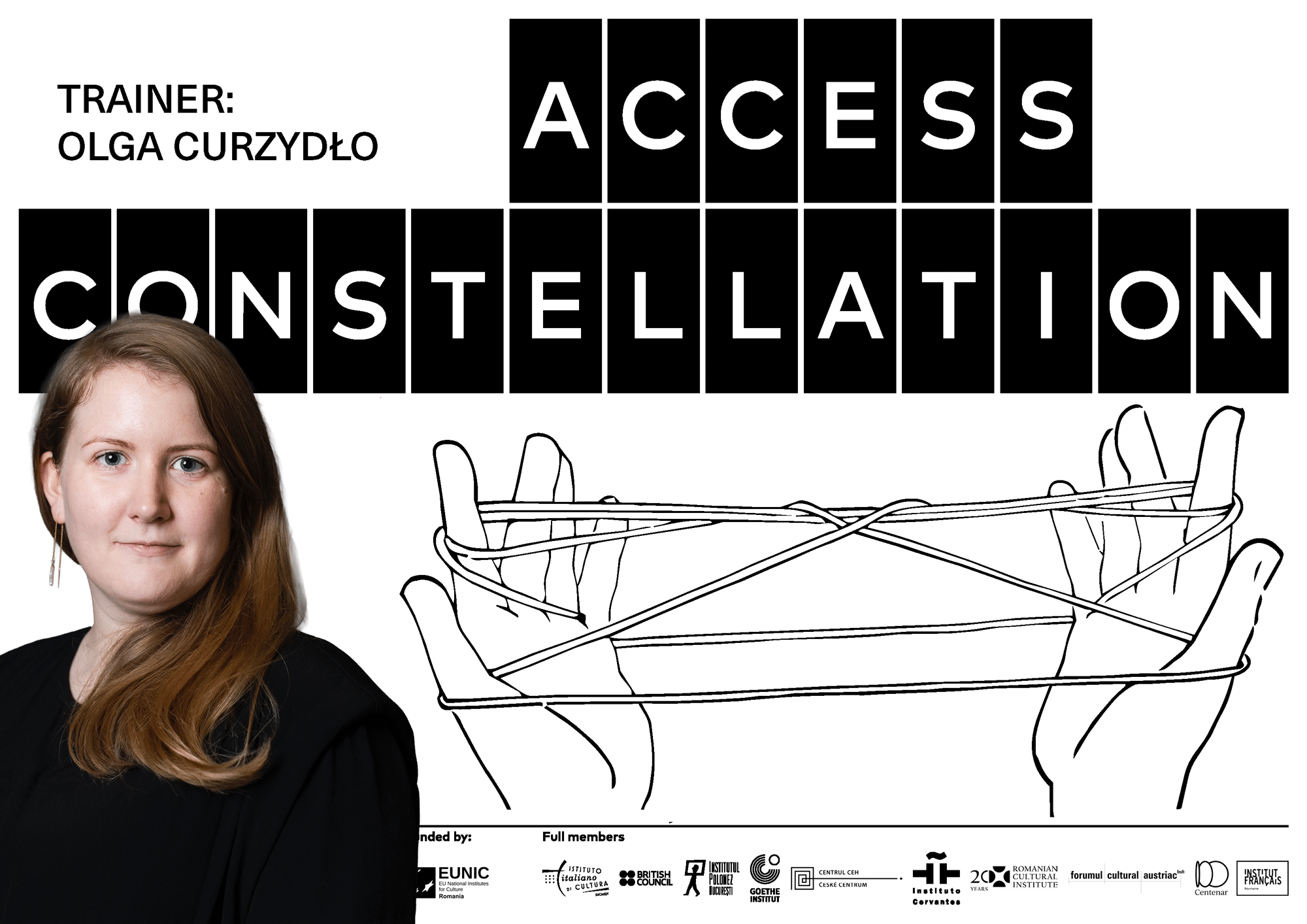
Dates: 6–10.10.2026
Over the course of 5 days, we will explore what accessibility and inclusion mean, how they can be put into practice in a cultural institution, and look at the specific case of Pitești Prison Memorial.
Topics will include:
- introduction to accessibility
- who benefits from accessibility
- practical solutions for accessibility
- inclusive cultural education and public programmes
- the accessible culture model
- cooperation with NGOs and self-advocates
Trainer: Olga Curzydło
Olga is an accessibility coordinator and producer of cultural events. From 2018 to 2022 she coordinated accessibility at Cricoteka in Kraków, and since 2022 she has been the accessibility coordinator at Sinfonia Varsovia. She is an expert evaluator for the Polish Ministry of Culture’s Accessible Culture programme and co-founder of the Dobrze Association, which works to improve accessibility in the cultural sector. She has collaborated with institutions such as the Juliusz Słowacki Theatre and Wawel Royal Castle.
This workshop is part of the project Access Constellation: Co-creating Inclusive Cultural Futures. The project is run by EUNIC Romania and supported by the EUNIC Cluster Fund 2026, with the support of the Polish Institute in Bucharest.
In 2014, the Foundation opened the Pitești Prison Memorial to the general public within the building of the former prison itself.
In 2022, the Foundation opened the Museum of Communism for Children, a project dedicated to children and teenagers, enabling them to explore the theme of communism in Romania.