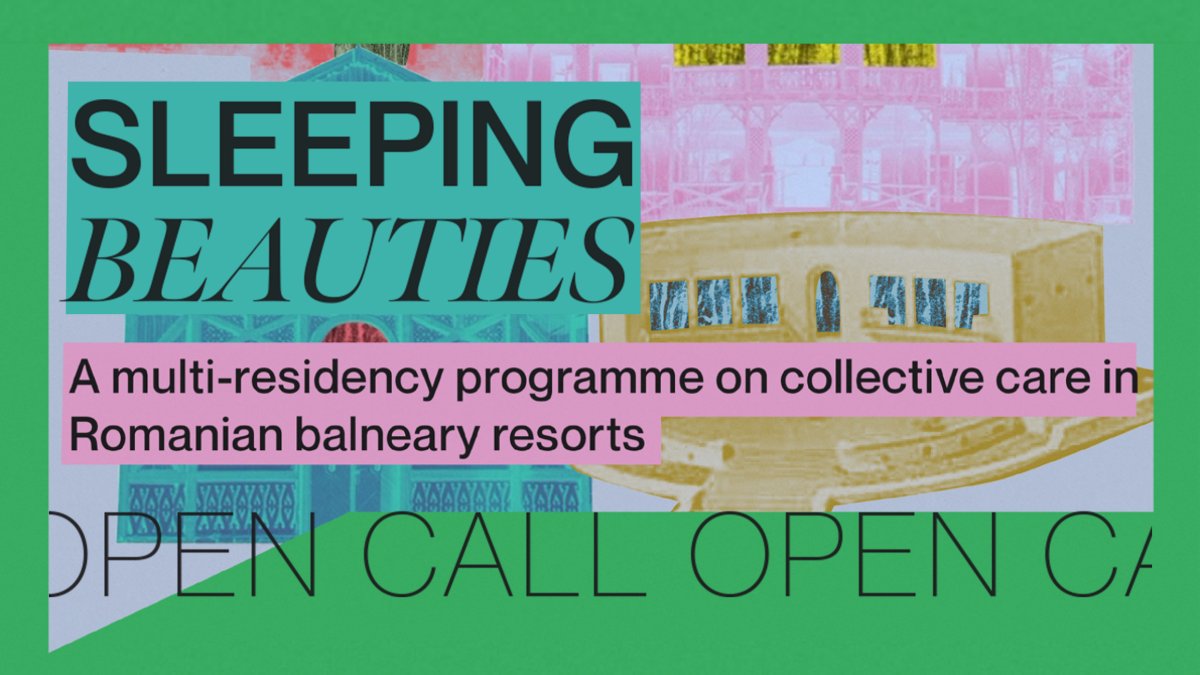
A multi-residency programme on collective care in Romanian balneary resorts.
Who can apply: Interdisciplinary and performative artists, architects (including landscape architects and historians), filmmakers, researchers, designers and makers, community organisers, and socially engaged practitioners interested in heritage, wellbeing, ecology, public space, and the regeneration of balneary resorts.
Eligibility: citizens or permanent residents from Czech Republic, UK, Germany, Poland, Spain, and Romania
Period of residencies: Two (2) weeks at various dates between July to September 2026 (see below for exact dates)
Place of residencies: balneary resorts across Romania
Submission deadline: 21st of May 2026
About the Project
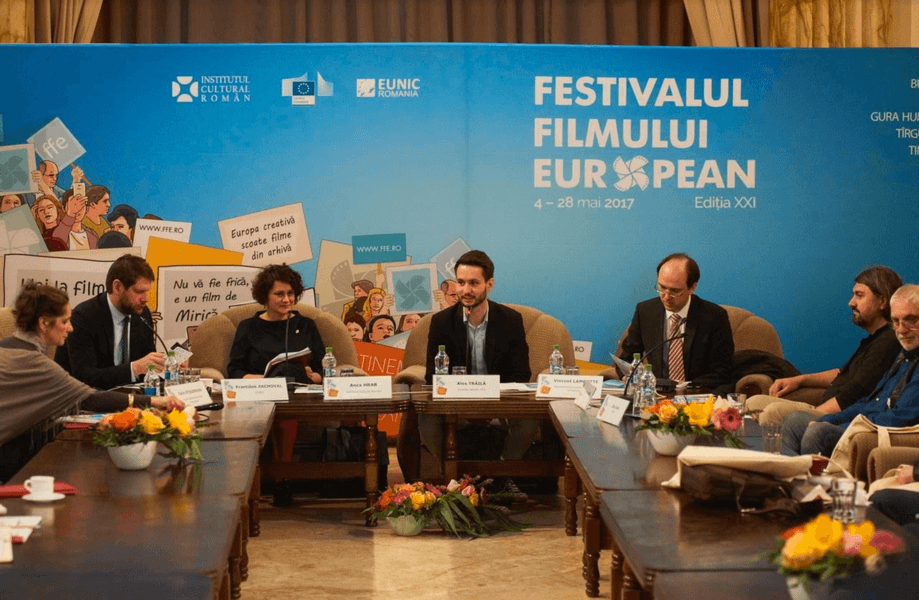
SLEEPING BEAUTIES is a multi-residency project designed and developed by EUNIC Romania. It involves six cultural institutions operating in Romania – the British Council, the Czech Centre, the Goethe Institute, the Cervantes Institute, the Polish Institute and Fundația9, each engaged in supporting one residency.
EUNIC – European Union National Institutes for Culture – is Europe’s network of national cultural institutes and organisations, with 39 members from all EU Member States and associate countries.
The project was framed by this consortium of European partners, in collaboration with curator Ilinca Păun Constantinescu – PhD, President & Founder of Ideilagram Association, Co-founder of the Architecture Office Ideogram Studio, Lecturer at Ion Mincu University of Architecture and Urban Planning Bucharest, Department of Theory and History of Architecture, coordinator of MuzA – the Museum of Architecture in Romania and its itinerant national programme.
Already an established artist residency programme of the EUNIC Romania cluster, Sleeping Beauties is the third edition following Flowing Streams (which explored water as a social connector) and Reclaiming Post-Industrial Futures (which focused on post-industrial heritage). To see how last year’s residencies unfolded, we invite you to watch this video documentary.
Local context
Romania’s balneary resorts, once carefully designed microcosms of health, leisure, and collective life, stand today between memory and renewal. Built around mineral waters, therapeutic practices, parks, and public life, these spa towns shaped landscapes, communities, and everyday cultures across the country. From imperial-era resorts and early modern park-cities to socialist infrastructures of care and seaside tourism complexes, they played a major role in Romania’s cultural and urban history.
After 1989, many entered a long period of decline. Buildings were abandoned, treatment facilities closed, public spaces deteriorated, and coherent systems of care were fragmented through privatisation and the lack of long-term vision. Yet beneath this visible erosion lies a remarkable and still active potential: architectural heritage, extraordinary natural resources, layered memories, and local organizations imagining new futures for these places. In the absence of large-scale top-down solutions, local initiatives are the ones creating new models of regeneration through research, culture, restoration, advocacy, and community engagement.
Today, these resorts are increasingly being rediscovered not only as heritage sites, but as living cultural landscapes. Their value lies in historical buildings and wellbeing, but also in their capacity to inspire sustainable ways of thinking about ecology, public space and tourism. The selected places reflect the richness and diversity of this landscape: the Austro-Hungarian elegance of Borsec, the Roman and imperial legacy of Băile Herculane, the socialist modernism of Amara, the layered seaside development of Eforie and Techirghiol, and the early 20th-century “park-city” model of Băile Govora. Together, they form a palimpsest of architectural styles, planning ideologies, and relationships between nature and the built environment.
Like in the sleeping beauty metaphor, what appears dormant is waiting to be reawakened. These resorts are no longer remnants of a bygone era, but fertile places for collective imagination towards sustainable futures.
SLEEPING BEAUTIES is a project that works with representative balneary resorts and local communities across Romania, offering a broad view of the diversity, heritage, and renewed potential of these remarkable cultural landscapes:
- BORSEC – a mountain resort shaped by Austro-Hungarian heritage, mineral waters, and distinctive wooden villa architecture, animated today by community-led cultural action;
- BĂILE HERCULANE – one of Europe’s oldest thermal resorts, where Roman and imperial heritage meets ecological and civic revitalisation along the Cerna river;
- AMARA – a modernist spa town where socialist-era architecture of care, collective memory, and active treatment infrastructure remain visible and relevant;
- EFORIE & TECHIRGHIOL – Black Sea resorts where interwar heritage, seaside modernism, mass tourism, and contemporary cultural initiatives overlap;
- BĂILE GOVORA – an early 20th-century park-city where architecture, vegetation, and therapeutic culture form a unique landscape of care.
The programme is an invitation to explore these remarkable places and their layered histories, to connect with local initiatives and communities and to engage with organisations working across heritage preservation, architecture, archival research, cultural programming, ecology, and community development.
Through artistic, spatial, performative, or research-based practices, participants are invited to contribute to the ongoing renewal of these towns and to rethink heritage as a resource, care as a collective practice, and balneary resorts as laboratories for future ways of living.
Conditions of the Residency:
The residency covers travel costs from the selected applicant’s country of residence (up to 500 Euro), accommodation within the premises of the host organisation, some meals, a fee of 700 EUR and a 300 EUR production budget.
The programme encourages and assists the insertion of the resident into the everyday life of the town. The host organisation will provide mediation and knowledge of the local context, connect the resident with the local community, and share available resources for research. Communal meals will be organised on occasion.
Selected residents are kindly informed that the residency will be documented on video, in a format similar to last year – link here.
Only individual applicants can apply.*
*Duos may apply, but the amount allocated per residency will remain unchanged, as mentioned above.
Eligibility and Criteria:
The applicants must be citizens or permanent residents from the following countries: Czech Republic, UK, Germany, Poland, Spain and Romania.
Each residency space is targeting applicants from one country and will select one participant. Please check the list of host organisations and the country eligibility.
We encourage applications from practitioners with diverse disciplinary backgrounds and artistic approaches: interdisciplinary artists, architects/landscape architects, architecture historians, filmmakers, researchers, community organisers, and socially engaged practitioners with a minimum of 5 years of experience in their respective fields. Please check the eligibility of applicants for each host organisation.
We are particularly interested in practitioners who showcase an ability to work collaboratively and flexibly across disciplinary boundaries; have practices aligned to ecological and sustainable principles of thinking and working; ground their work on decolonial and critical perspectives that acknowledge the interdependencies of different life forms; have experience or interest in heritage, wellbeing, ecology, public space, and the regeneration of balneary resorts.
We celebrate talent from all backgrounds and we welcome applicants of all ages, genders, and diverse linguistic, cultural, and minority backgrounds, including those from underrepresented communities.
The resident must stay for the entire residency period (between 10 to 14 days) within the time span proposed by each host organisation.
The resident must organise one public event during the residency (workshop, discussion, performance, gathering, cooking session, or any other type of public format) that will take place in relation to the local community or the residency space. Additional support for event planning and dissemination will be provided. The costs of the event will be supported from the production budget. No other outcome is expected.
The resident will be expected to keep a journal in any type of format: texts, audio-visuals, objects, drawings, sketches, new works, or others. The documentation of the project will be made public.
How to Apply:
Please apply to the residency by filling out this application form* in English by the latest 21st of May, 2026, 23:59 CET.
After the representatives from the Sleeping Beauties project and partnering institutions have evaluated the applications, there will be a round of interviews with shortlisted candidates taking place online on the 28th and 29th of May 2026.
Applicants will be notified of the outcome of the selection process by 5th of June 2026. All applicants will receive an answer by email, but due to limited resources, we are unable to give individual feedback.
*Please be aware that you need a google account to fill out the google form in order to apply to the residency program.
If you have any questions please contact us at roprojects@britishcouncil.org
Residencies and Host Organisations
1. AMARA / Local Host: Vira Association
Supported by: The Polish Institute
Open to applicants from: POLAND
Residency Period: 13.07-27.07.2026
Who can apply: The Amara residency is particularly suited to architects/landscape architects, architectural researchers, interdisciplinary artists from Poland interested in socialist-era modernism and the urban visions embedded in spa infrastructure. We are looking for residents who can critically explore the architecture and planning of mass tourism, public health, and leisure developed during the socialist period, as well as their changing meaning today.
Location: Amara
Website: https://www.vira.ro/proiecte, https://amintiridulciamara.ro/acasa
Local context:
Amara is a spa resort where socialist-era architecture remains not only visible but still actively used, making it a valuable case study for understanding the continuity of mass tourism, healthcare, and collective leisure practices shaped during the communist period. The recently published volume “Greetings from Amara! Fragments of Architecture and Collective Memory”, developed by the Vira Association after three years of interdisciplinary research, explores the resort through the lenses of architecture, balneary practices, and social memory. Focusing on buildings such as the Lebăda (the Swan), Ialomița, and Parc hotels, the project highlights how spaces designed in the 1970s as integrated environments of care, combining treatment facilities with cultural and social infrastructure, continue to shape experiences today, even as the resort transitions from a state-supported system to one largely serving retired people. By documenting this “architecture of care,” the research opens a broader discussion about the future of spa towns and the potential of their built environments to support wellbeing and community life.
About the hosts:
Vira Association, founded in 2006 in Bârlad, is a cultural NGO focused on visual documentation, heritage, community development through culture, civic organization, and non-formal education. Bringing together sociologists, historians, visual researchers, and film professionals, the organization works to reconnect communities with their cultural resources by documenting, promoting, and reintegrating local heritage into everyday life. Through research projects, exhibitions, educational programs, and partnerships with local institutions, Vira emphasizes community involvement, long-term collaboration, and the use of cultural assets (both tangible and intangible) as drivers for sustainable local development. Their recent work in Amara reflects this approach, combining research on balneary heritage with public engagement and exploring ways to enrich the social and cultural life of the resort beyond its therapeutic function
2. BORSEC / Local host: Culturarium Association
Supported by Fundația9
Open to applicants from: Romania
Residency Period: 23.07-06.08 2026
Who can apply: interdisciplinary and performative artists, architects/landscape architects, anthropologists and community organisers working between heritage and contemporary culture. We encourage projects that explore local identity, multicultural histories, architecture and ever-present nature through collaborative/participative formats engaging the local community.
Location: Borsec
Website: https://www.facebook.com/AsociatiaCulturariumEgyesulet
Local context:
Borsec emerged as a prominent spa town during the Austro-Hungarian period, when balneary resorts in Eastern Europe became cultural, social, and therapeutic destinations shaped by carefully designed architectural and landscape compositions. Known for its mineral waters and the distinctive character of its built heritage, particularly the wooden villas with richly decorated verandas, carved details, and intricate ornamental elements, Borsec developed as a refined environment that harmoniously integrated architecture, nature, and public space. Over time, however, much of this heritage has fallen into decay due to neglect, fragmented ownership, and the absence of coherent management, affecting both the town’s physical fabric and its cultural memory. Despite these challenges, Borsec retains significant potential, with its architectural identity and natural setting offering a strong foundation for sustainable revitalization through sensitive restoration, community engagement, and contemporary reinterpretation.
.About the hosts:
Culturarium Association is a local initiative based in Borsec that focuses on cultural, civic, and educational development as a means to strengthen community engagement while promoting sustainable tourism and the local economy. Founded by five members who returned to their hometown after their studies, the association works to reposition Borsec as both a livable place and a meaningful destination. Their activities range from community programs for children and adults – such as workshops, cultural events, and festivals – to projects dedicated to documenting, preserving, and raising awareness about the town’s architectural heritage. Through research, public exhibitions, and collaborations with professionals and other organizations, they aim to safeguard traditional craftsmanship, encourage responsible interventions in the built environment, and foster dialogue between local actors, ultimately contributing to a more coherent, culturally rooted, and sustainable development of the spa town.
3. BĂILE HERCULANE / Local Host: LOCUS Association (HerculaneProject)
Supported by Cervantes Institute
Open to applicants from: SPAIN
Residency Period: 27.07- 09.08.2026
Who can apply: We invite interdisciplinary artists and practitioners, landscape architects, ecologists, researchers, and performers interested in the relationship between natural systems, balneary and architectural heritage, explored through the revitalisation of the Cerna riverbanks or other latent public spaces via site-responsive, participatory, and community-oriented proposals.
Location: Băile Herculane
Website: https://herculaneproject.ro/echipa/
Local context:
Băile Herculane is one of the oldest thermal spa resorts in Romania and Europe, with a history spanning nearly two millennia since its first documentation in 153 AD during Roman times. Shaped by successive cultural influences and reaching its peak in the 19th century under Austro-Hungarian rule, the resort evolved from a medical destination into a vibrant cultural and leisure center, attracting figures such as Emperor Franz Joseph and Empress Elisabeth (Sissi). Its development was driven by the therapeutic value of its thermal springs and its exceptional natural setting, now part of a Natura 2000 protected area. Today, Herculane reflects both the challenges and the opportunities typical of historic spa towns, with a remarkable architectural legacy comprising dozens of listed monuments and strong cultural identity rooted in both history and mythology. This layered heritage, though fragile in places, continues to offer significant potential for regeneration and reinterpretation.
About the hosts:
Herculane Project emerged in 2017 from a group of architecture students – now founders of the Locus Association – who were struck by both the decay and the layered beauty of Băile Herculane’s heritage, initially aiming to raise awareness around the neglected Neptune Baths, the initiative quickly evolved into concrete actions aimed at safeguarding and reactivating the site. Over time, it has grown into a broader civic and cultural platform that combines hands-on interventions, research, advocacy, and community engagement. The NGO plays an active mediating role between authorities, private owners, and local residents within a complex legal and social context, contributing to building collaborations and advancing restoration efforts, including through crowdfunding campaigns and partnerships. Their current activities extend across multiple scales and themes: ongoing work along the Cerna riverbanks through spatial improvements and clean-ups, community mapping and research projects, educational programs such as the summer school “Baia de Arhitectură”, volunteer-led interventions, cultural events and initiatives focused on the rediscovery and activation of thermal heritage. Together, these efforts foster connections between people, nature, and public space, contributing to a long-term, community-driven vision for the sustainable regeneration of Băile Herculane.
4, 5. EFORIE + TECHIRGHIOL / Local Host: Forumul Artelor Vizuale
Supported by the the Czech Centre, the Goethe-Institute
Open to applicants from: THE CZECH REPUBLIC AND GERMANY*
Residency Period: 10.08-23.08. 2026
Who can apply: We welcome research-driven artists and practitioners interested in the tensions between interwar heritage, post-socialist change, and contemporary mass tourism. Through archival and site-based research, applicants are invited to explore evolving cultures of leisure and translate these layered histories into visual, spatial, narrative, or performative forms.
Location: Eforie Sud
Website: www.forumulartelorvizuale.ro, www.arhivelelitoralui.ro
* Please note that the German and Czech residencies run simultaneously. Selected artists are free to decide whether or not to collaborate during the residency.
Local context:
The seaside architecture of Eforie developed in the late 19th and early 20th centuries as part of a broader effort to transform the area between the Black Sea and Lake Techirghiol into a modern balneary and leisure destination. While Eforie Nord grew through multiple independent parceling projects designed by different architects, reflecting both local ambitions and European modernist influences (particularly visible in experimental developments such as the Blank parcel, associated with G. M. Cantacuzino and Horia Creangă), Eforie Sud developed around the vision of Ion Movilă, was originally known as Băile Movilă, later Movilă-Techirghiol, and is considered the first resort on the Romanian seaside. Together, the two areas combined villas, hotels, sanatoria, and public spaces, later expanding through socialist-era mass tourism infrastructure that reshaped the coast for collective leisure. Today, this layered heritage, from early balneary structures to interwar modernism and mass-tourism developments, remains a valuable yet fragile cultural landscape in need of integrated regeneration.
About the hosts:
The Visual Arts Forum Association (FAV), through its Eforie Colorat program, has developed a cultural platform on the Romanian Black Sea coast that combines artistic production, heritage research, and community engagement. At its core is the revitalization of the former Cinemascop summer cinema in Eforie Sud into an active cultural hub hosting films, exhibitions, and events that extend the life of the seaside beyond the tourist season. Complementing this, the Arhivele Litoralului project documents the coast’s history, architecture, and collective memory, bringing together artists and researchers to explore its transformation over time. Together, these initiatives reframe the seaside as a complex cultural landscape and support its sustainable, year-round reactivation.
6. BĂILE GOVORA / Local Host: Studiogovora
Supported by: the British Council
Open to applicants from: U.K.
Residency Period: 07.09-20.09.2026
Who can apply: We welcome designers, makers, researchers, and interdisciplinary practitioners from the UK interested in spa towns, the park movement, and cultures of wellbeing. We particularly encourage projects engaging with material heritage, spatial design, and the relationship between architecture, landscape, and healing environments. Govora can be explored as a historic “park-city”, where vegetation, water, and architecture were conceived together as a landscape of care.
Location: Băile Govora
Websites: https://govora.studio
Local context:
Founded in 1887 at the initiative of Prime Minister Ion C. Brătianu, Băile Govora was developed as a public spa resort inspired by the French “park-city” model, aiming to replicate Western European balneary culture within Romania. Initially built around a central bath establishment and park, the resort expanded in the early 20th century through significant investments in infrastructure, architecture, and landscape design, becoming a thriving town shaped by tourism and private development. During the communist period, mass tourism brought both modernization and the loss of historic buildings, while after 1990 the decline in visitors led to widespread abandonment and degradation of key structures. In recent years, however, restoration efforts supported by public funding have begun to revive parts of the town, with the central park remaining a vital anchor and renewed interest in the resort opening new possibilities for sustainable development.
About the hosts:
Studiogovora was established in 2019 by two architects whose diploma projects focused on the evolution and heritage of Băile Govora. The initiative has since grown into an interdisciplinary laboratory for the town’s cultural heritage, where research meets action and care for the past informs future-oriented visions. Bringing together architects, art historians, cultural managers, and communication specialists – some with personal roots in Govora, others drawn to it over time – the team works through restoration projects, public space interventions, advocacy, education, and community engagement.
Their activities include organizing events such as the Balneary Architecture Days and the Govora Heritage Lab summer school, while their broader approach combines historical research, hands-on restoration, and participatory initiatives to promote responsible development, slow tourism, and the role of culture in fostering collective wellbeing. As part of MuzA – the Museum of Architecture in Romania’s first four-year curatorial programme, Studiogovora will host the museum’s second itineration in the summer of 2026, becoming one of the first places where its growing exhibition and “living archive” take shape through collaboration with local actors and site-specific knowledge.

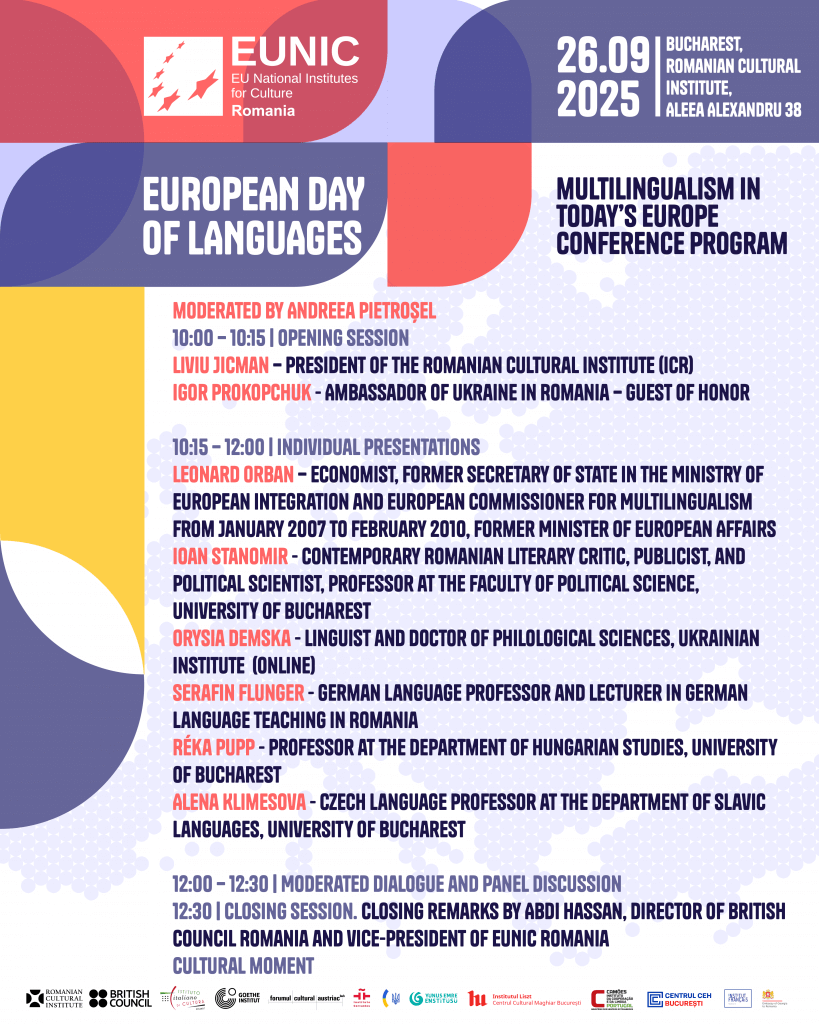
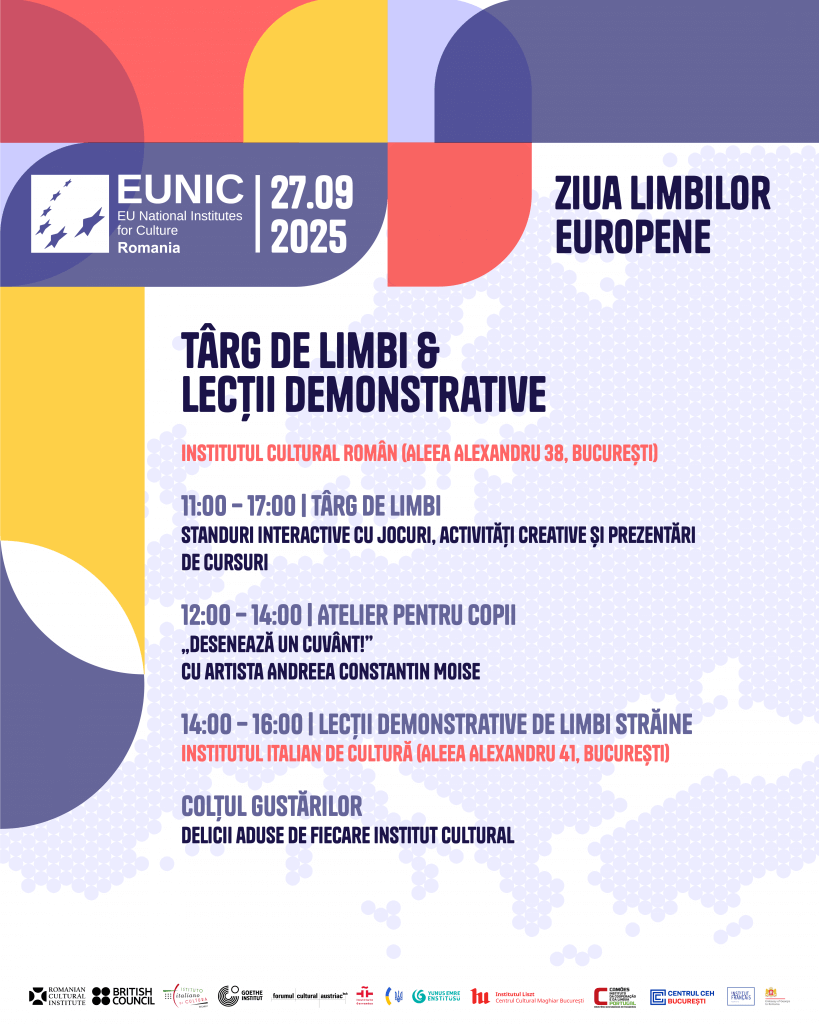
 Data: 26 septembrie 2025
 Interval orar: 10:00 – 13:00
 Locație: ICR (Aleea Alexandru 38)